The dances
Twentieth-century dance crazes
From the charleston to disco: the popular dances a decades revue borrows from, where each came from and how to spot it on stage.
Reserve the cabaret ↗Why the decades work on stage
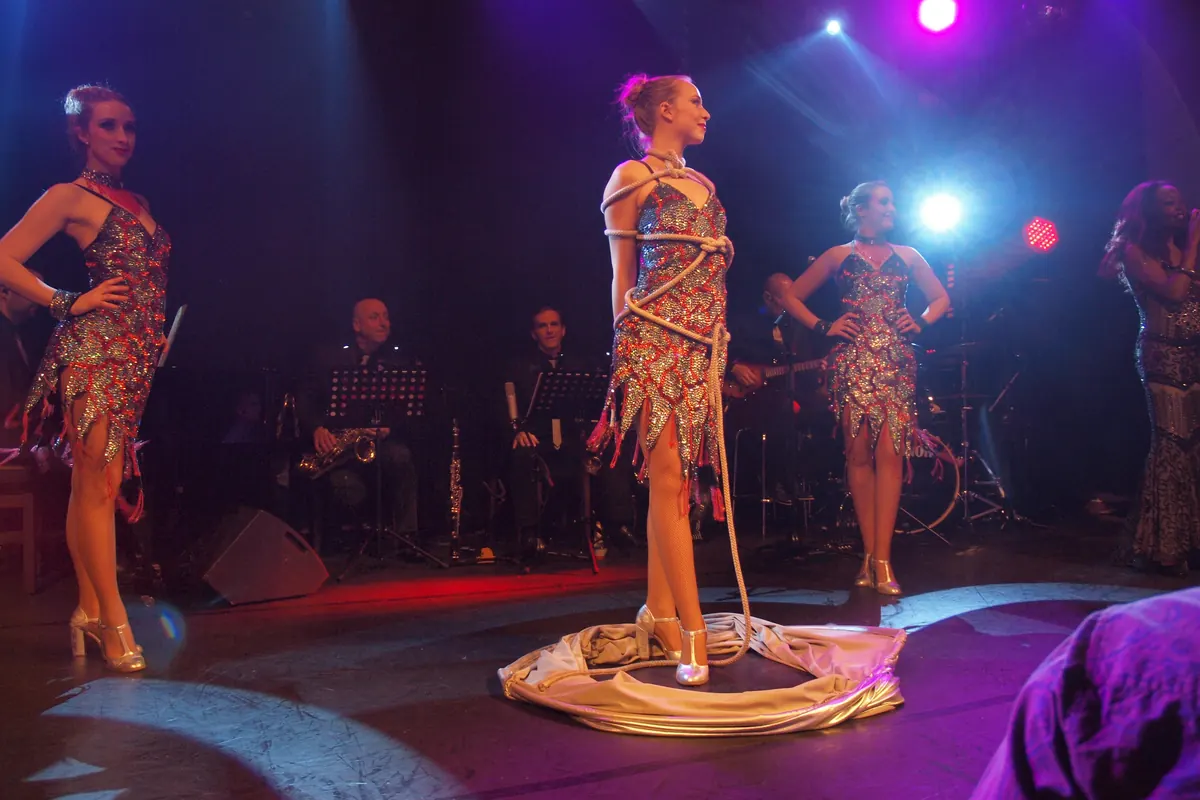
A revue that moves through the twentieth century has a gift of a structure. Almost every decade had a dance that young people took up, older people worried about and everybody recognises today. Costume does half the work: a fringed dress says 1920s before anyone moves, flared trousers say 1970s. Knowing a little about each craze makes the numbers more fun to place. What follows is general history, drawn from Wikipedia's articles on each dance; the choice and order of numbers in any show is its own. Read it as a field guide for the evening: a few clues to listen and look for, so each change of costume and music tells you roughly where on the century's dance floor you have landed.
The charleston
The charleston is named after the harbour city of Charleston in South Carolina. Its rhythm reached mainstream dance music through a 1923 tune, 'The Charleston', by the composer and pianist James P. Johnson, which came from the Broadway show Runnin' Wild. The dance probably grew from older African-American challenge dances, and in Harlem it became a fast kicking step, feet flicking forwards and backwards. Its peak came in 1926 and 1927. On stage, look for swinging knees, kicking heels and beaded fringe flying.
Swing and the Lindy Hop
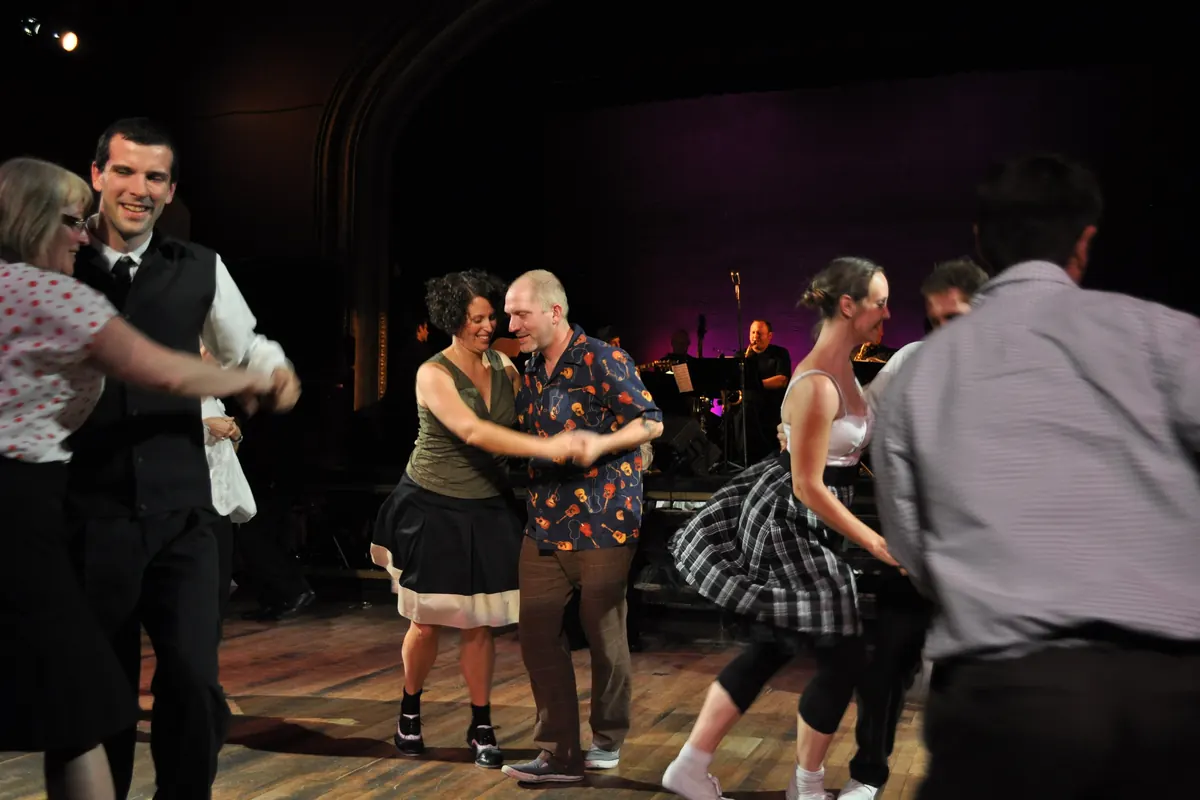
Swing dancing developed alongside the swing style of jazz between the 1920s and the 1940s. Hundreds of styles came and went; the best known today is the Lindy Hop, born in the African-American communities of Harlem in 1928. It mixes partnered and solo dancing, and its defining move is the swingout, which moves partners between an open, hand-to-hand position and a closed one. Jitterbug became a catch-all word for these fast, bouncy dances. On stage, swing numbers mean couples, spins and lifts.
Rock and roll
Rock and roll took shape in America over the late 1940s and early 1950s, blending rhythm and blues with gospel, jazz, boogie-woogie and country, and it took its name in 1954. Its backbeat, usually from the snare drum, made it dance music first. Teenagers found that beat ideal for reviving the jitterbug of the big-band years, and new dance crazes followed at school dances and basement parties. Full skirts and quick footwork are the era's familiar look.
The twist
The twist was inspired by rock and roll and became a worldwide craze from 1959 into the early sixties. Chubby Checker's version of 'The Twist' reached number one in 1960 and again in 1962. The steps are simple: feet about shoulder width apart, hips, torso and legs rotating together on the balls of the feet, arms held out and almost still. Time magazine noted that the dancers barely touch each other. It is the easiest decade to spot from the back of the room.
Disco
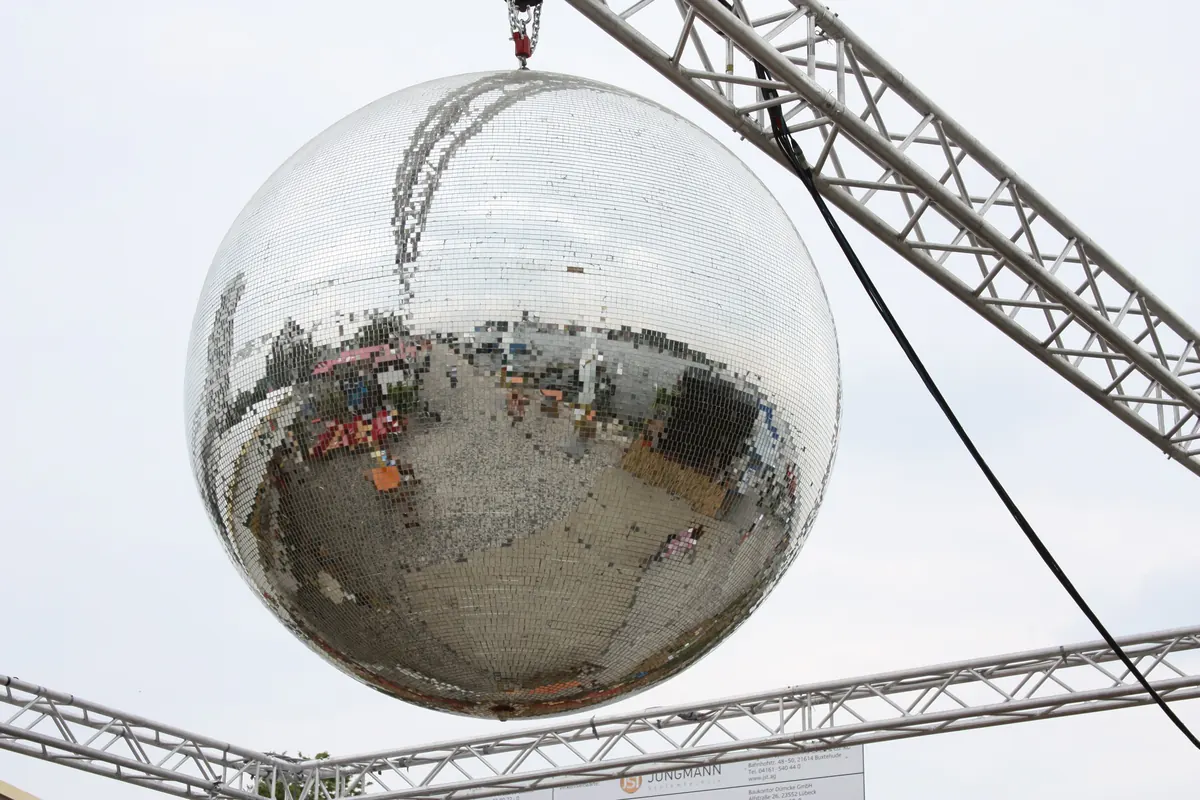
Disco emerged from American urban nightlife in the late 1960s, built on four-on-the-floor beats, syncopated bass lines, strings and horns. Discothèques themselves were mostly a French invention. By October 1975 the Hustle ruled the floor, and the 1977 film Saturday Night Fever carried disco dancing into the mainstream. The look is unmistakable: mirror balls, flashing coloured light and outfits cut loose for movement. Mirror balls and flashing colour are its signature.
Pop and the end of the century
Pop music in its modern form dates from the mid-1950s in the United States and Britain, and for a while it meant much the same as rock and roll. Later it came to stand for music with repeated choruses, catchy hooks and tempos built for dancing, borrowing from rock, dance and Latin styles. That makes the last decades of a century revue the most varied: music-video choreography, group routines and big vocal numbers. The practical guide covers the evening itself.
Read next: Prague cabaret show: worth it?
Sources